
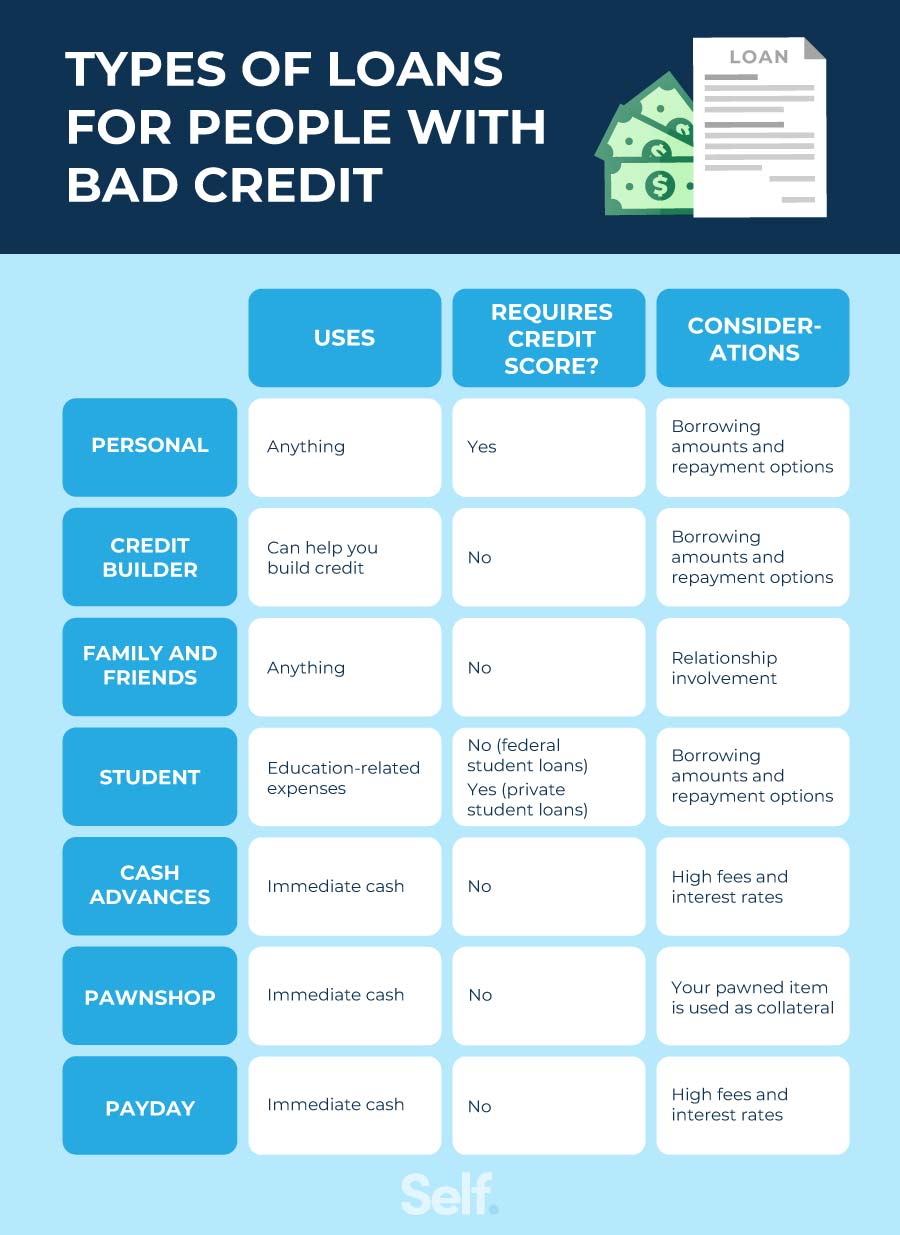
580 is the threshold where traditional banking usually shuts its doors. For many Americans, hitting that number feels like hitting a brick wall in the middle of a financial highway. It’s the line separating “prime” borrowers from those forced into the much more expensive and complicated world of subprime lending.
The market for these loans isn’t a monolith. While a high score might get you a low interest rate at a major national bank, having a bruised credit history doesn’t mean you’re completely locked out. It just means the rules change. You stop looking for the lowest possible rate and start looking for lenders who care about more than just a three-digit number.
Lenders like Upstart, Avant, and OneMain Financial have carved out niches by looking at different data points. They understand that your ability to repay a loan isn’t solely tied to a FICO score. Instead, they look at employment history, income stability, and sometimes even your educational background to decide if you’re a risk or a reliable client.
But the math still favors the borrower with the better score. You’re going to pay for the privilege of accessing these funds. Interest rates for bad credit loans are significantly higher than those for prime borrowers, a reality many people ignore until they see the actual monthly payment. If you aren’t careful, you’re just digging a deeper hole with a very expensive shovel.
The Mechanics of Subprime Lending and Rate Fluctuations
When you walk into a bank with a 520 score, you might as well be invisible. Traditional institutions rely on automated underwriting systems designed to minimize risk by saying “no” as quickly as possible. They don’t want to spend human hours investigating why your score dropped; they just want to move on to the next applicant.
Subprime lenders operate differently because they specialize in those “riskier” profiles. This includes people with thin credit files, people recovering from medical debt, or those who have simply missed a few payments in the past. Because these lenders take on more risk, they charge more in interest. It’s a simple equation of risk versus reward that dictates every term of your contract.
One big advantage of modern online lending is the ability to check rates without damaging your score. You can use a soft credit pull to see what you qualify for. This is a vital distinction. A “hard pull” stays on your report and can drop your score by a few points. A “soft pull” is just a look under the hood that doesn’t leave a mark. You should always explore your options via soft pulls first.
Many borrowers find better terms through specialized platforms like Avant, which uses a simple three-step process to get you moving quickly. This speed is great for people facing emergencies, but it also means you have to be decisive. You won’t have weeks to shop around once you realize you need that cash by Friday.
Comparison is the only way to survive this market. A difference of 5% in interest might seem small on a $1,000 loan, but on a $10,000 loan over three years, it’s a massive amount of money. You need to look at the APR (Annual Percentage Rate), not just the monthly payment. The APR includes the interest and the fees, giving you the true cost of the money.
| Lender Type | Primary Focus | Typical Credit Requirement | Impact of Late Payments |
| Traditional Banks | Credit Score | 660+ | High – Often automatic denial |
| Online Subprime | Income/Stability | 500 – 650 | Moderate – Requires manual review |
| No-Credit Lenders | Alternative Data | N/A | Low – Focus on cash flow |
Navigating the Nuances of No-Credit and Low-Score Loans
Some people fall into a different category: they don’t have bad credit, they have *no* credit. This is common for young adults or immigrants who have lived in the country for a short time. If you have no history, you are a ghost to the credit bureaus. You aren’t a risk, but you aren’t a known entity either.
Lenders like Oportun have developed models to help these individuals. They focus on “affordable and low cost” options that emphasize fixed payments. Instead of relying on a history of credit card use, they look at how much you earn and how much you spend on necessities. It’s a more holistic view of your financial life, but it still comes with a premium price tag.
Then there is the “middle ground” lender. These companies specifically target the 580-and-below crowd. CNBC reports that Upstart and OneMain Financial are major players here. They act as a bridge between the “no” from the big banks and the high-interest lenders that some people fear.
When you’re in this position, you have to be disciplined. It’s easy to look at a $5,000 loan and think, “I can handle $200 a month.” But life changes. You might lose your job, your car might break down, or an unexpected medical bill might arrive. (It almost always does, right before you’ve paid off a big loan). Always borrow less than you think you need.
Consider these specific lender profiles when you are deciding where to send your application:
- OneMain Financial: They offer a way to see loan options without an immediate credit score impact. They are a solid choice for those who want a more traditional feel but need more flexibility than a big-box bank.
- Oportun: Best for those with little to no credit history. They focus on quick funding and fixed payments, which helps with budgeting.
- Avant: Good for those who want a streamlined, digital-first experience. The three-step process is designed for speed and efficiency.
If you’re using a service like Jetzloan to manage your finances or look for options, make sure you are looking at the total cost of borrowing. Every extra fee is a dollar that isn’t going toward your debt. In the subprime world, fees can be hidden in the fine print, buried under labels like “origination fee” or “processing fee.”
The Trap of High-Interest Debt and Predatory Terms
The biggest danger in the bad credit loan market is the “predatory” lender. These companies don’t actually care if you pay them back. They make their money on the interest alone, often charging rates that are mathematically impossible to outrun. If you see a loan offer that looks too good to be true, like “guaranteed approval” regardless of your situation, run the other way.
Guaranteed approval is a red flag. There is no such thing as a risk-free loan. If a lender claims they don’t care about your credit at all, they’re likely planning to charge you a 36% or 48% APR. That is a debt spiral waiting to happen. You want a lender that evaluates you, even if that evaluation is heavily weighted against your current score. A rejection is better than a trap.
Pay attention to the “repayment term.” A longer term means lower monthly payments, but it means you’ll pay significantly more in interest over the life of the loan. A five-year loan might feel easier on your wallet today, but you could end up paying back double the amount you originally borrowed. It’s a trade-off between immediate survival and long-term solvency.
You should also keep an eye on “prepayment penalties.” Some lenders will punish you for being responsible. If you get a better job and want to pay off your loan early to save on interest, some companies will charge you a fee for doing so. This is effectively a tax on your progress. Always ask: “Can I pay this off early without being charged extra?”
A quick way to check if a lender is reputable is to look for third-party reviews and rankings. For example, BadCredit.org provides reviews that rank services based on interest rates and reputation. Don’t just take the lender’s word for it; see what actual users are saying about their collection practices and customer service.
Strategic Management of Subprime Borrowing
If you find yourself needing a bad credit loan, you must have a plan for repayment from the moment you sign the papers. This isn’t a “get out of jail free” card; it’s a tool. If you use it to pay off high-interest credit card debt, you’re making a smart move. You are essentially consolidating several high-interest “leaks” into one manageable, even if still expensive, bucket.
However, if you use a personal loan to fund a lifestyle you cannot afford, you’re just accelerating your financial demise. The loan is a bridge, not a destination. It should be used for specific, productive purposes: debt consolidation, home repairs that increase equity, or essential medical expenses. Using it for a vacation or a new car when you are already struggling is a recipe for bankruptcy.
The most effective way to use these loans is to use the “repayment window” to fix your credit. If you take a personal loan to pay off a collection account, your score might jump significantly within a few months. Use that momentum. As your score rises, your goal should be to refinance that high-interest loan into a lower-interest loan. This is the “ladder” method of credit repair.
The ladder looks like this: Start with a subprime loan with a moderate rate. Use it to stabilize your finances and pay down high-interest debt. As your score moves from 550 to 620, you look for a new lender. Once you hit 680, you move to a prime lender to wipe out the subprime debt. It requires discipline, but it is the only way to break the cycle of high-interest living.
Credit is a tool of leverage. In the hands of a disciplined person, it can build wealth. In the hands of someone who is desperate, it can be a weight that drags them down for decades. Always look at the total cost, always check the fine print, and never, ever assume that a “fast” loan is a “cheap” loan.
Quick answers
What is a bad credit loan?
A bad credit loan is a type of personal loan specifically designed for individuals with poor credit scores, often featuring higher interest rates to offset increased lender risk.
Can I get a personal loan with bad credit?
Yes, many lenders offer specialized products for those with low credit scores, though approval depends on your income, employment status, and debt-to-income ratio.
How do bad credit loans affect my credit score?
While the application may cause a small, temporary dip due to a hard inquiry, making consistent on-time payments can help improve your credit score over time.
What are the typical interest rates for bad credit loans?
Interest rates for bad credit loans are significantly higher than standard personal loans to compensate lenders for the higher risk of default.
How can I increase my chances of loan approval with poor credit?
You can improve your chances by providing proof of stable income, reducing existing debt, and ensuring all your financial information is accurate on the application.
